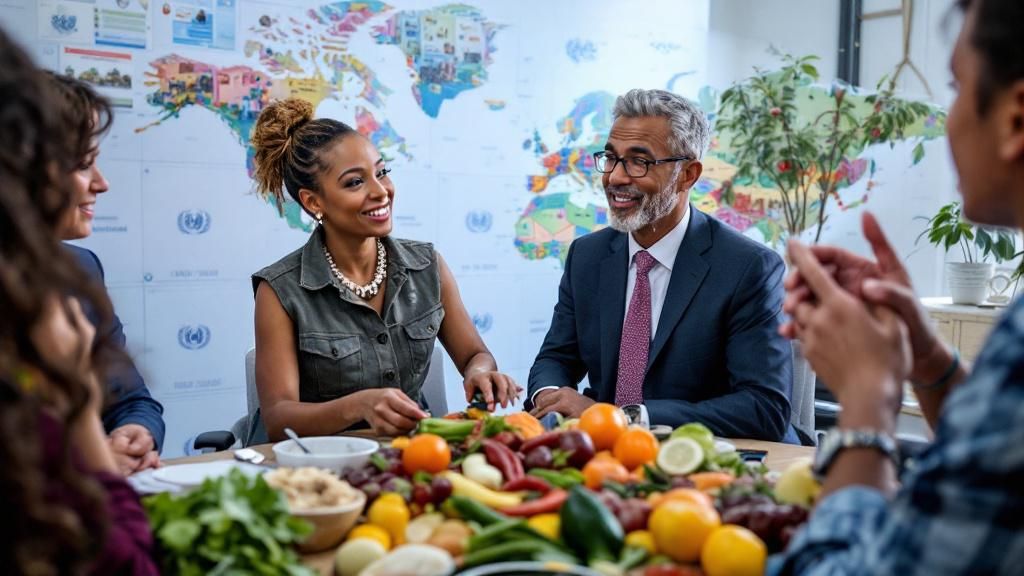

The United Nations has launched an far-reaching initiative designed to tackle the ongoing worldwide challenges of poverty and hunger that keep impacting millions across the globe. This extensive initiative marks a crucial turning point in international development, combining innovative strategies, substantial financial commitments, and coordinated work from participating nations to create lasting change. The initiative addresses root causes whilst offering urgent assistance, committed to redefining how the international society approaches these interconnected challenges. Discover how this innovative strategy intends to reshape lives and create a fairer world.
Worldwide Action on Poverty Challenges
The United Nations’ most recent initiative represents a turning point in the global battle with poverty and hunger. By deploying funds across multiple continents and engaging both developed and developing nations, the UN aims to create a coordinated response that goes beyond traditional boundaries. This joint effort acknowledges that hunger and poverty are linked problems requiring unified action. The initiative brings together national governments, non-governmental organisations, and commercial partners to ensure broad reach and sustainable outcomes across disadvantaged areas.
Member states have made a commitment to substantial amounts of collaborative work, providing funding and technical expertise to strengthen current initiatives. The project emphasises openness and responsibility, establishing specific measures to assess progress and impact. By utilising current systems and building upon successful regional models, the UN aims to improve efficiency and minimise duplication of efforts. This strategic alignment guarantees that support goes to those with greatest need whilst developing robust frameworks able to tackling future crises successfully.
Urgent Response Strategies
The initiative’s opening phase focuses on emergency relief and quick response in areas facing acute food insecurity and acute hardship. Urgent food provisions, clinical care, and emergency housing schemes are being rolled out to impacted populations within weeks. The UN has set up rapid-response teams supplied with resources to assess on-site situations and adapt measures accordingly. These pressing actions aim to save lives whilst longer-term solutions are being implemented, ensuring at-risk communities receive critical support promptly.
Financial payment systems have been optimised to expedite aid provision to front-line bodies active in affected areas. Local community partners and leaders are being given greater authority to identify key priorities and allocate funds in a streamlined manner. Training initiatives for distribution staff ensure that assistance gets to intended beneficiaries whilst upholding dignity and cultural sensitivity. These immediate actions serve as a bridge between immediate crisis management and long-term development, offering breathing space for communities to stabilise and commence recovery.
Extended-Term Strategic Objectives
The strategy creates far-reaching objectives for reducing poverty and improving food security over the next decade. Planned investment in agricultural systems, educational provision, and medical infrastructure seek to address underlying causes of poverty rather than simply addressing immediate problems. The UN has undertaken to help small-scale farmers through technology transfer and market linkage initiatives, helping them to increase productivity sustainably. These essential funding establish routes for societies to achieve self-sufficiency and economic independence whilst safeguarding natural resources.
Sustained success requires institutional strengthening and capacity building within government bodies and community-based entities. The programme prioritises workforce training, administrative enhancements, and broader economic expansion to establish resilient economies capable of withstand future shocks. By encouraging business creation and advancing equitable development, the programme aims to create sustainable employment opportunities. These strategic investments represent a significant transformation towards enabling local populations to determine their future direction, ensuring lasting transformation beyond the programme’s formal timeframe.
Deployment and Collaborative Framework
The UN’s programme operates through a comprehensive delivery framework that engages governments, independent organisations, and private sector stakeholders. By setting up coordination offices across Africa, Asia, and Latin America, the initiative guarantees culturally tailored interventions that respond to local contexts. This locally-focused structure facilitates swift action capabilities whilst preserving monitoring from UN headquarters. Partnerships with global development organisations offer essential financial instruments, allowing enduring infrastructure initiatives that create employment opportunities and enhance food security systems across disadvantaged communities.
Success relies essentially on genuine collaboration between industrialised and emerging nations, with open oversight mechanisms guaranteeing resources reach intended beneficiaries. The framework incorporates capability enhancement schemes that strengthen local institutions and empower communities to become independent. Regular monitoring through external reviews and community feedback mechanisms maintains programme standards and effectiveness. By building sustained relationships rather than provisional support arrangements, the UN initiative aspires to create systemic change that breaks cycles of hardship and malnutrition, ultimately building strong nations capable of environmental and economic progress.
